
From sports assets to the sports ecosystem
Several areas are becoming particularly relevant, including:

Sports performance technology
Technology is becoming embedded in professional and amateur sports: Athlete performance, coaching, communication, injury prevention, analytics and training are increasingly supported by specialized hardware, software and data.
The attractive businesses in this category often have characteristics investors already understand from technology and healthcare: proprietary technology or data, recurring revenues, high customer retention and the potential to scale across teams, leagues, geographies or even different sports.

Fan engagement and commerce
A fan is no longer simply somebody who buys a ticket and watches a game.
The relationship increasingly extends across content, merchandise, membership, digital communities, hospitality and personalized experiences throughout the year. Businesses that help rights holders understand, engage and monetize those fans can therefore occupy strategically important positions in the sports value chain.

Data and analytics
Sports generate enormous quantities of data, from athlete and performance data to fan behavior and commercial analytics.
The investment opportunity lies not simply in owning data but in turning it into products and workflows that customers are willing to pay for. Sports organizations are increasingly using fan data to improve sponsorship, ticketing, merchandising, media rights and personalized engagement.

Media, content and distribution
The economics of sports media are also changing.
Streaming and digital distribution are creating more ways to reach fans directly, while rights holders increasingly seek to control the relationship with their audiences. This creates opportunities for businesses providing content production, distribution, monetization and technology infrastructure.

Ticketing and venue technology
The stadium itself is becoming a digital and commercial platform.
Ticketing, dynamic pricing, access, hospitality, payments, customer relationship management and in-venue technology increasingly connect into one ecosystem. The opportunity is therefore larger than selling a seat: Technology can help rights holders increase revenue per fan while improving the customer experience.
What makes a sports technology business investable?
The word sports alone does not create an investment thesis.
In fact, when looking at businesses around the sports ecosystem, many of the criteria that make an asset attractive are remarkably similar to investor criteria in the consumer and technology sectors. The key factors to highlight include:
1
Recurring and predictable revenue
Subscription, licensing, contracted or otherwise recurring revenue is fundamentally different from revenues dependent on individual events or sporting performance.
2
Mission-critical positioning
The strongest businesses solve a problem that a club, league, athlete, broadcaster or fan cannot easily ignore—and ideally become embedded in their customer’s workflow.
3
Proprietary technology, IP or data
Technology can create differentiation. Proprietary data can make that differentiation increasingly difficult to replicate.
4
High retention and attractive unit economics
Growth alone is insufficient. Investors increasingly want evidence that customers stay, economics improve with scale and incremental growth creates value.
5
Scalability beyond one league or sport
A solution developed for baseball that can expand into football, or a product built for elite athletes that can penetrate the amateur market, can dramatically expand its addressable market.
6
A credible path to professionalization
Many sports-related businesses remain founder-led and relatively underdeveloped commercially. For the right investor, that can be an opportunity rather than a weakness, as building professional sales organizations, improving digital distribution, expanding internationally and pursuing acquisitions can create significant additional value.
The consumer and technology playbook increasingly applies to sports
Perhaps the most interesting development is that parts of sports businesses increasingly resemble businesses from other industries.
A fan engagement platform can have characteristics of a consumer subscription business. A performance solution may combine elements of health & wellness and technology. A sports data company can resemble vertical software. A ticketing platform may have marketplace economics. A connected training product can combine hardware, software, community and recurring revenues.
That matters because it changes the investor universe.
A company no longer needs to attract only a specialist “sports investor.” Depending on its business model, the logical owner could be a technology investor, a consumer-focused private equity fund, a media company, a strategic sports platform or an investor specializing in data and software.
And this can be equally important for sports organizations themselves. The right partner may bring much more than capital: technology expertise, international distribution, consumer marketing capabilities, M&A experience or access to entirely new markets.
The opportunity is no longer simply to invest in who plays the game. It is increasingly about investing in the businesses that make the game perform, connect and grow.
Contributors

Related Perspectives
Recent Transactions in Sports Tech






Value That Lasts for Sports and Investors: Six Criteria for Sports Tech
Lincoln International and the CSBT analyze trends and share criteria for investors evaluating assets in the sports ecosystem.

Beyond the Deal: The Race to Create the First Truly Global AV and Digital Workplace Player
Lincoln International’s experts examine recent transactions and structural trends driving the AV and digital workplace sector.
MarshBerry | Wealth Management M&A: Record Activity Continues as Firms Position for Growth in Q3 2026
MarshBerry’s Q3 2026 U.S. Wealth Market Update examines the largest September year-to-date deal count in the history of U.S. wealth advisory M&A, what is driving today’s deals and where the… Read More about MarshBerry | Wealth Management M&A: Record Activity Continues as Firms Position for Growth in Q3 2026

Active, Outdoor & Enthusiast Brands Market Update | Q3 2026
The third quarter of 2026 reinforced the underlying strength of the active, outdoor & enthusiast sector, with participation remaining at record levels and consumer engagement continuing to broaden across sports,… Read More about Active, Outdoor & Enthusiast Brands Market Update | Q3 2026

EMS Quarterly Review | Q3 2026
In Q3 2026, the electronics manufacturing services (EMS) sector exhibited a moderation in performance and further stabilization of the supply chain. Despite pockets of mixed component availability creating long lead… Read More about EMS Quarterly Review | Q3 2026
Investing in the Infrastructure Behind the Infrastructure
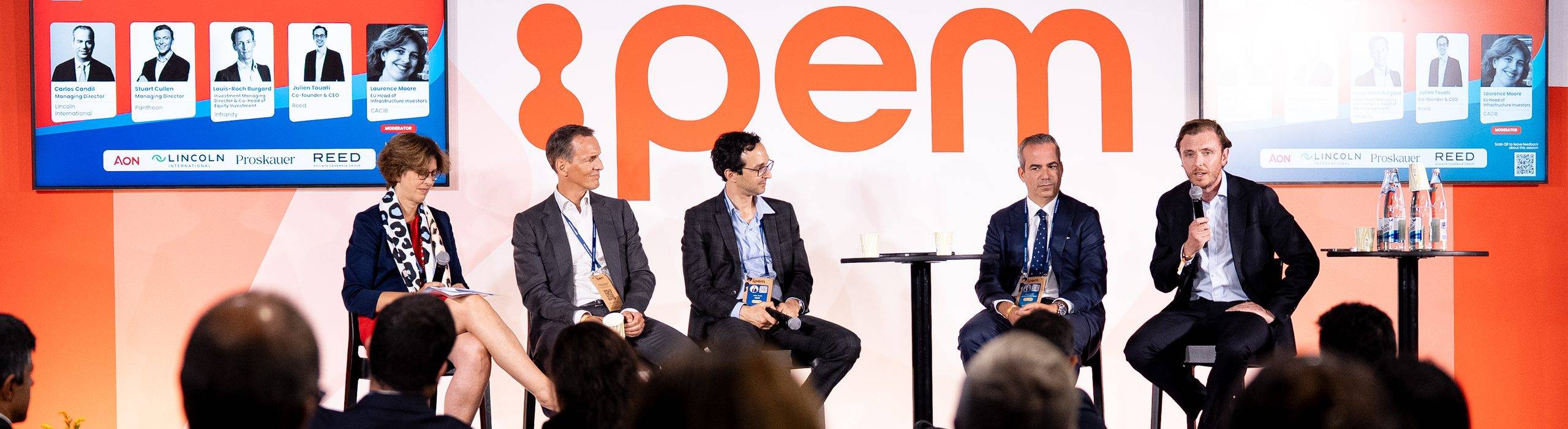
Lincoln International unpacks the opportunities surrounding infrastructure investments and the themes driving today’s private market investments in the infrastructure market.

Organic Growth in Asset Servicing: From Market Tailwinds to Execution Advantage
Lincoln International examines the asset servicing market in 2026, including the trends driving organic growth and investor interest.

HR Tech Industry Report | Q3 2026
The HR tech landscape is entering a new phase of development. Historically centered on administrative infrastructure and systems of record, the sector is expanding into a broader intelligent technology layer supporting enterprise execution in attracting, deploying, developing and retaining talent. This is increasing the strategic importance of HR technology within the enterprise and broadening the opportunity set across the employee lifecycle.

M&A Review | Smart Cities are a Key Investment Theme, Driven by Long-term Megatrends
The M&A Review featured Lincoln’s insights into investment opportunities and long-term tailwinds within the smart cities segment.

Fashion & Apparel Quarterly Review | Q3 2026
Lincoln International is pleased to present the latest issue of its Fashion & Apparel Quarterly Review. Global M&A value reached roughly $4.4 trillion through the first nine months of 2026,… Read More about Fashion & Apparel Quarterly Review | Q3 2026

Key Takeaways from WEFTEC 2026
Lincoln International shares six themes from WEFTEC 2026 shaping investment and M&A in the water and wastewater market.

Katharina Kober
Katharina Kober provides mergers and acquisitions (M&A) advisory services to clients across the technology industry, including private equity firms, privately held businesses, founders and shareholders. As an advisor, Katharina focuses… Read More about Katharina Kober

Lincoln International Adds Eduard Egelie as Managing Director, Bolstering Financial Services Advisory
Lincoln International adds Eduard Egelie as a Managing Director in London, strengthening the firm’s European financial services advisory capabilities.

Eduard Egelie
Eduard Egelie provides mergers and acquisitions (M&A) advisory services to European financial institutions as a Managing Director and leads Lincoln’s European financial services advisory capabilities, with additional responsibility for MarshBerry’s… Read More about Eduard Egelie

The Grocer | How Health Ingredients are Moving into the Mainstream
Lincoln International’s food and beverage experts unpack the functional ingredient trend and the incoming wave of consolidation.

Investors in Healthcare | Advanced Diagnostic Imaging: The Investment Case Moves Beyond Consolidation
Lincoln International’s healthcare services experts share insights in advanced diagnostic imaging with Investors in Healthcare.

Migwel Perrin
Migwel Perrin provides mergers and acquisitions (M&A) advisory services to private equity firms and private founders on smid- to large-cap transactions across a wide range of industries. He specializes in… Read More about Migwel Perrin

Lincoln International Adds Alessandro Foschi as Managing Director, Strengthening M&A Coverage in Italy
Lincoln International adds Alessandro Foschi as a Managing Director in Milan, strengthening the firm’s M&A coverage in Italy.

Alessandro Foschi
Alessandro Foschi provides mergers and acquisitions (M&A) advisory services to private equity firms, entrepreneurs and corporates. He leverages over two decades of experience in the investment banking industry to advise… Read More about Alessandro Foschi

Lincoln International Adds Nicolas Bender as Managing Director, Expanding European F&B Coverage
Lincoln International welcomes Nicolas Bender as a Managing Director in its Consumer Group, expanding the firm’s food and beverage platform in Europe.

Nicolas Bender
Nicolas Bender is a Managing Director in Lincoln’s Consumer Group specializing in the food & beverage industry. He advises private equity firms, business owners, entrepreneurs and executives on mergers and… Read More about Nicolas Bender

Thomas Geller
Thomas provides mergers and acquisitions (M&A) advisory services to private equity firms, founders, privately held businesses and public corporations, with deal experience across the technology, business services, industrials, energy and… Read More about Thomas Geller

Chemicals & Materials Quarterly Review | Q2 2026
Lincoln International is pleased to present the latest issue of its Chemicals & Materials Quarterly Review. The second quarter of 2026 was characterized by slower U.S. economic growth, persistent inflationary… Read More about Chemicals & Materials Quarterly Review | Q2 2026

Future of Deals | How AI is Changing Software M&A Valuations
Lincoln International’s expert discusses how AI is affecting software M&A, from valuations and buyer priorities to execution.

Pharma Services Deep Dive: The K-Shaped Recovery is Underway
Lincoln International’s experts share insights and updates on the K-shaped recovery of the global pharma services sector.